There comes a time in a man’s life when he quits asking only what the land can give him, and starts asking what it might become—if tended with patience and a little humility.
Our Pigs
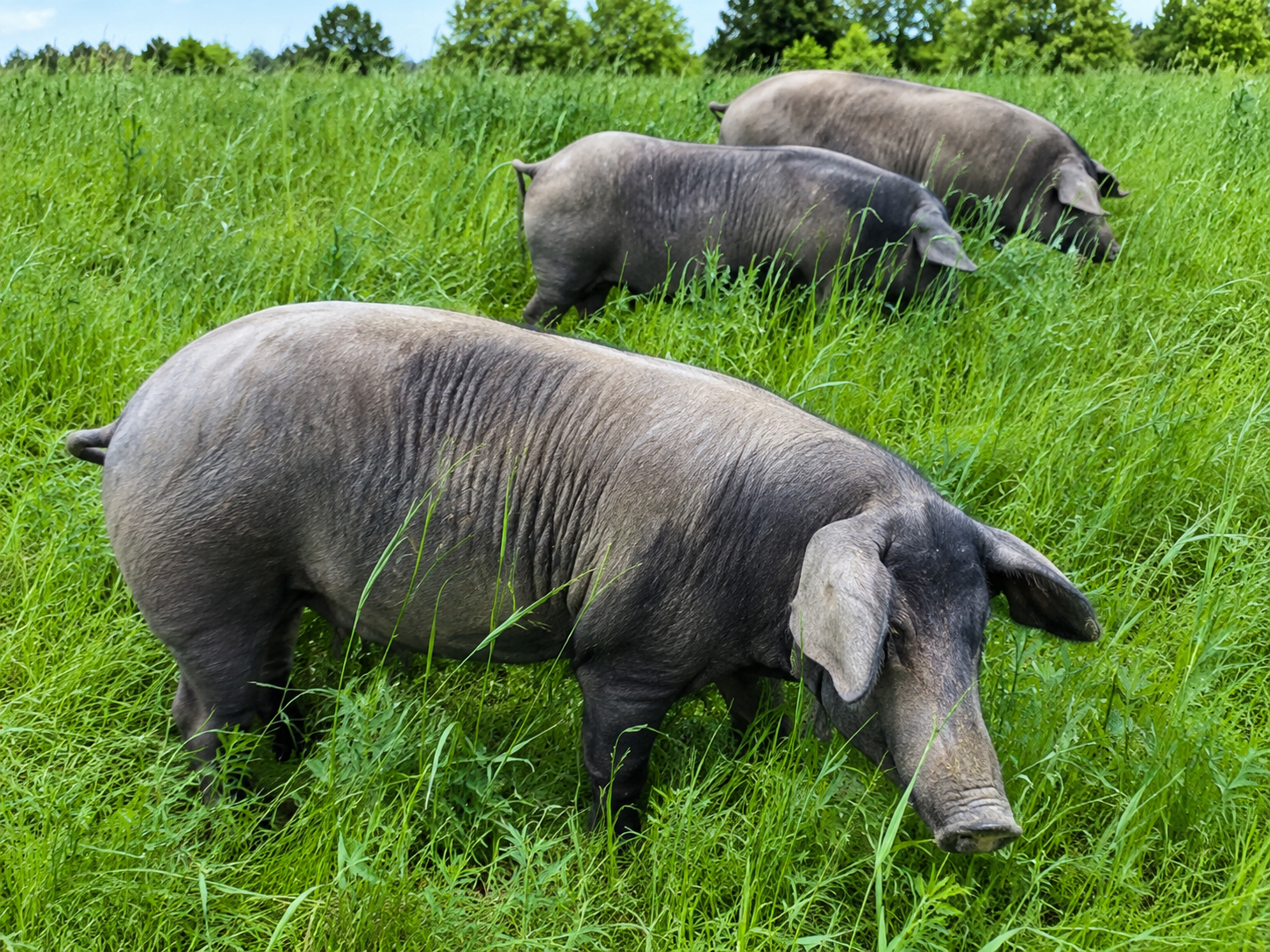
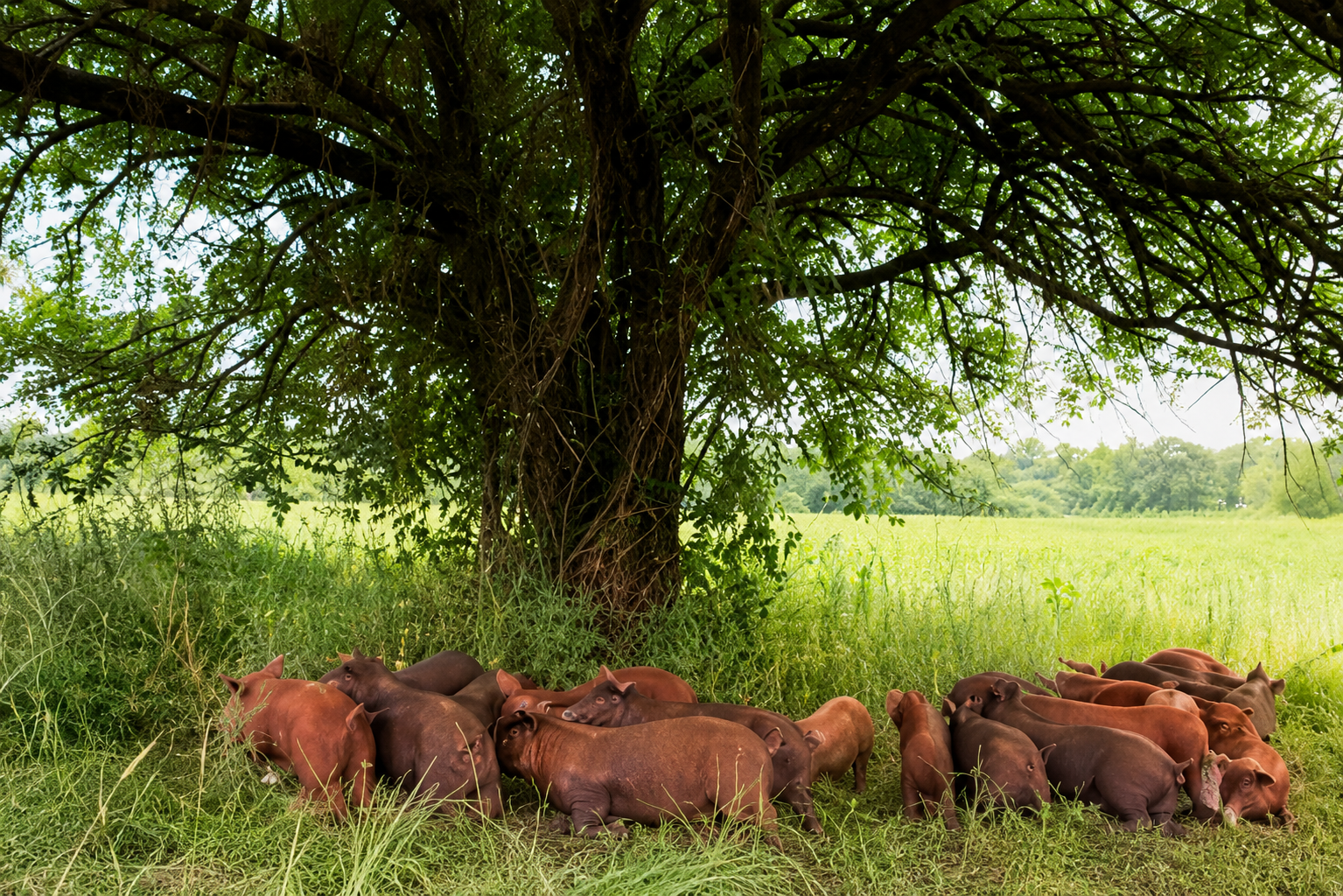
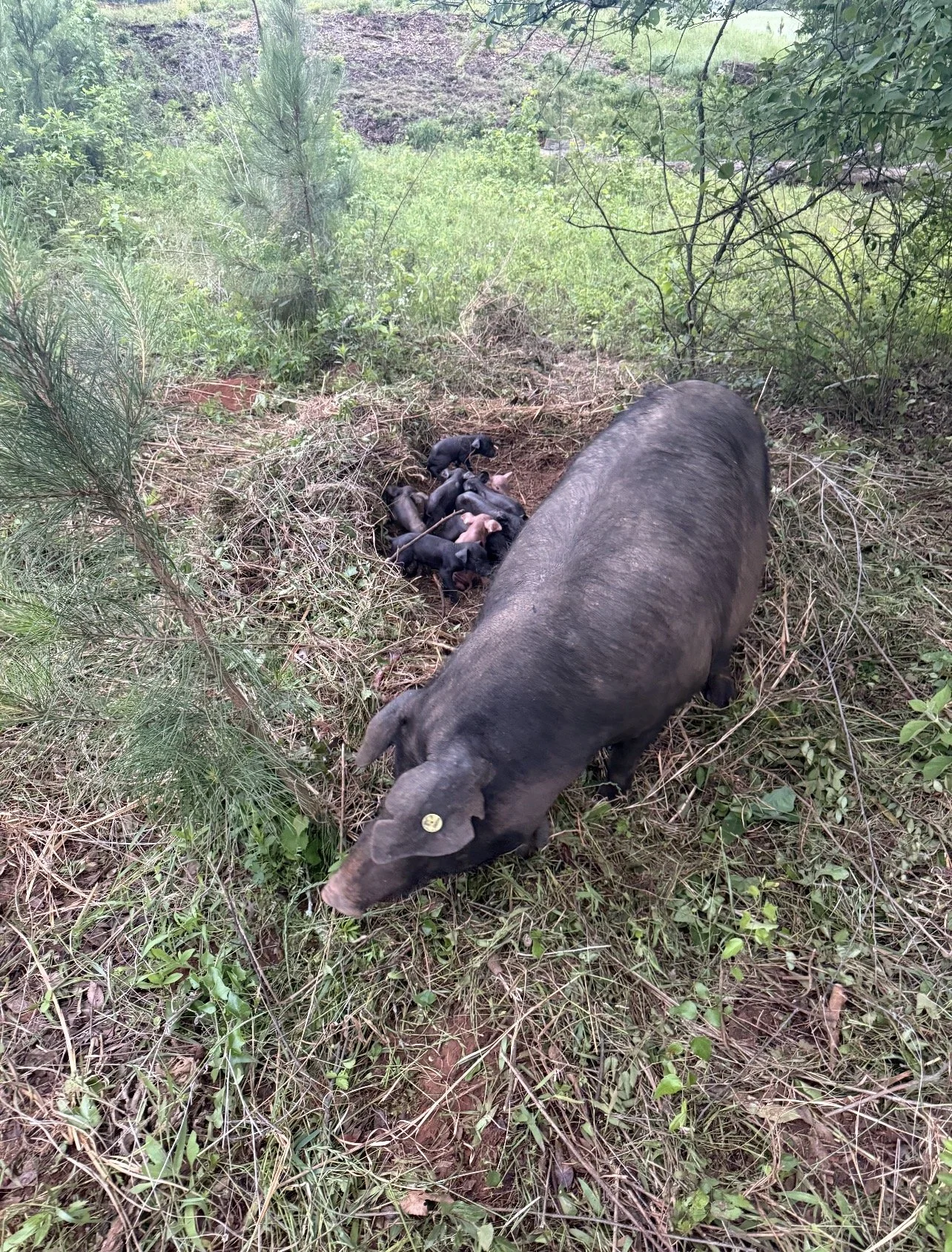
That question has been working on me for some time now, and it has led me, somewhat surprisingly, to pigs. Not the kind of pigs kept behind wire with hoofs on concrete, but the kind that belongs out under the sky.
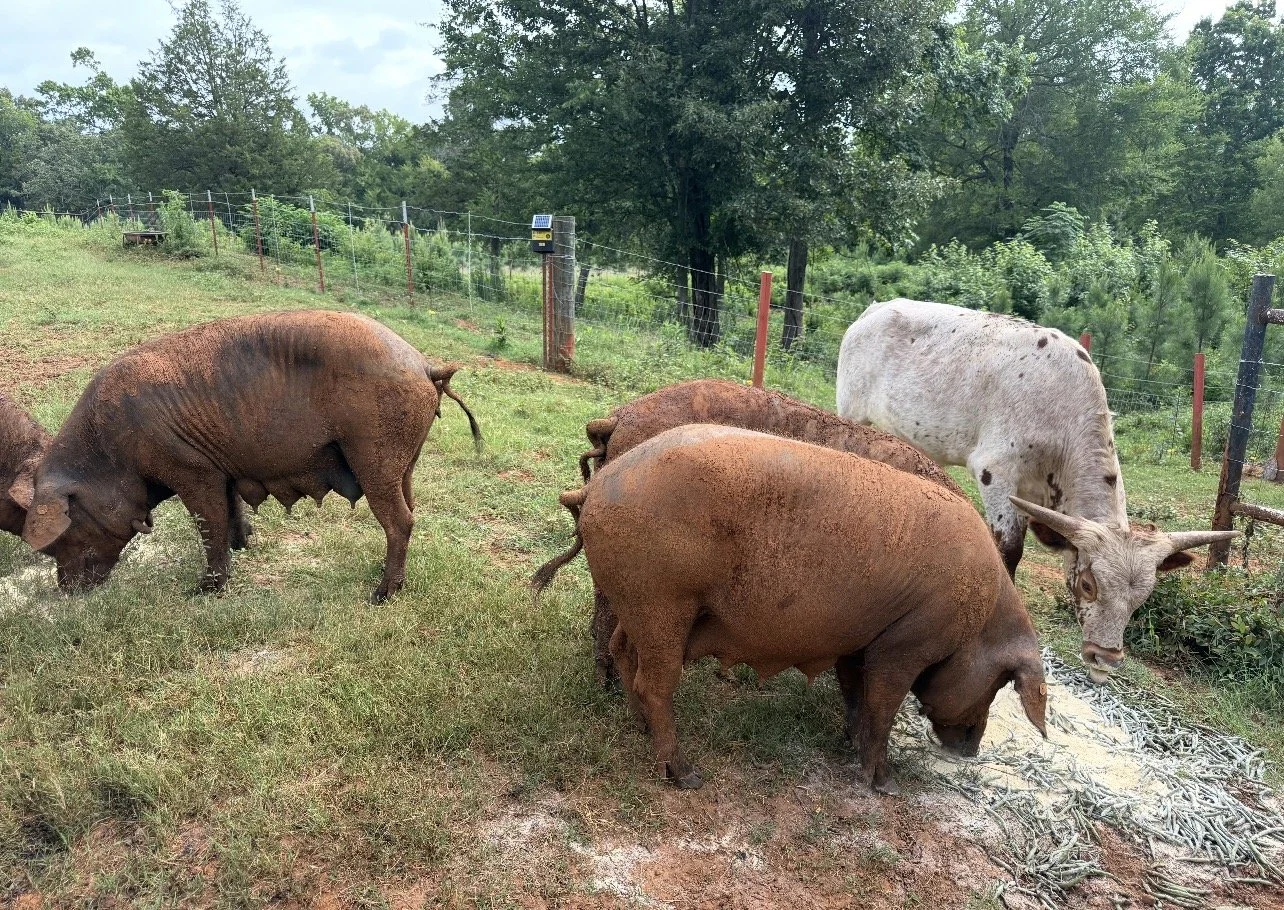
I first saw what that could look like over at Iron Farms in Kilgore, Texas. It wasn’t fancy. It wasn’t loud about itself, but there was a rightness to it that settled in on me—the sight of pigs moving across a turnip patch and pasture, working the ground as much as feeding from it. I left there with a notion I couldn’t quite shake: that pigs, raised well and treated right, might be partners in bringing land back to life.I’ve taken to calling that work “homeplacing,” a word I’ve tried to give some shape to before. It’s the slow and steady act of making a place not just productive, but whole again. Not by force, but by fitting yourself into its needs. For years now, I’ve kept this land without the help of commercial fertilizers, pesticides, or herbicides. That’s not a boast—it’s a choice, and sometimes a costly one. Instead, I’ve leaned on what the farms themselves offer: chicken litter, cow manure, time, and attention. Weeds are met with steel and sweat. Pests are handled the old way, which is to say, not always easily. But if you listen to the folks who’ve given themselves to soil regeneration, you’ll hear a common refrain: you don’t heal land without animals. And I’ve come to believe they’re right.Pigs, in particular, have a way of working the soil that no machine quite matches. They root and turn, opening the ground, letting air and water find their way back in. They fertilize as they go, not in measured applications, but in the steady rhythm of living. They push back brush and weeds, not out of spite, but out of hunger. And in doing so, they begin to restore a kind of balance that feels less imposed and more remembered.
The breed I’ve been drawn to is the Ibérico pig—a creature shaped as much by its place as by its lineage. These Spanish bred pigs were made for roaming, for foraging, for living in close conversation with the land. They carry a kind of patience in them, and their way of growing reflects it.
What sets them apart, beyond their dark coats and quiet disposition, is the nature of their fat. It’s rich in oleic acid—the same kind found in good olive oil—and it gives their meat a softness and depth that you don’t rush and you don’t fake. The fat weaves itself through the muscle, not in excess, but in balance, lending flavor that speaks more of nuts and grass than of grain bins and confinement. It’s the kind of pork that reminds you food is meant to nourish more than hunger.
The draw to Iberico pigs and the pork they provide isn’t only in the eating, though I won’t pretend that doesn’t matter. It’s in the raising. In the idea that these animals, living as they were meant to live, can help mend what has been worn thin. That their presence on the land is not a burden, but a blessing—if we are careful enough to let it be so.
I’ve walked a number of farms now where this kind of work is being done, and each one has its own way of telling the story. But the thread that runs through them all is this: regeneration is not an event. It is a relationship. And like any good relationship, it asks something of you and the animal partners you steward.
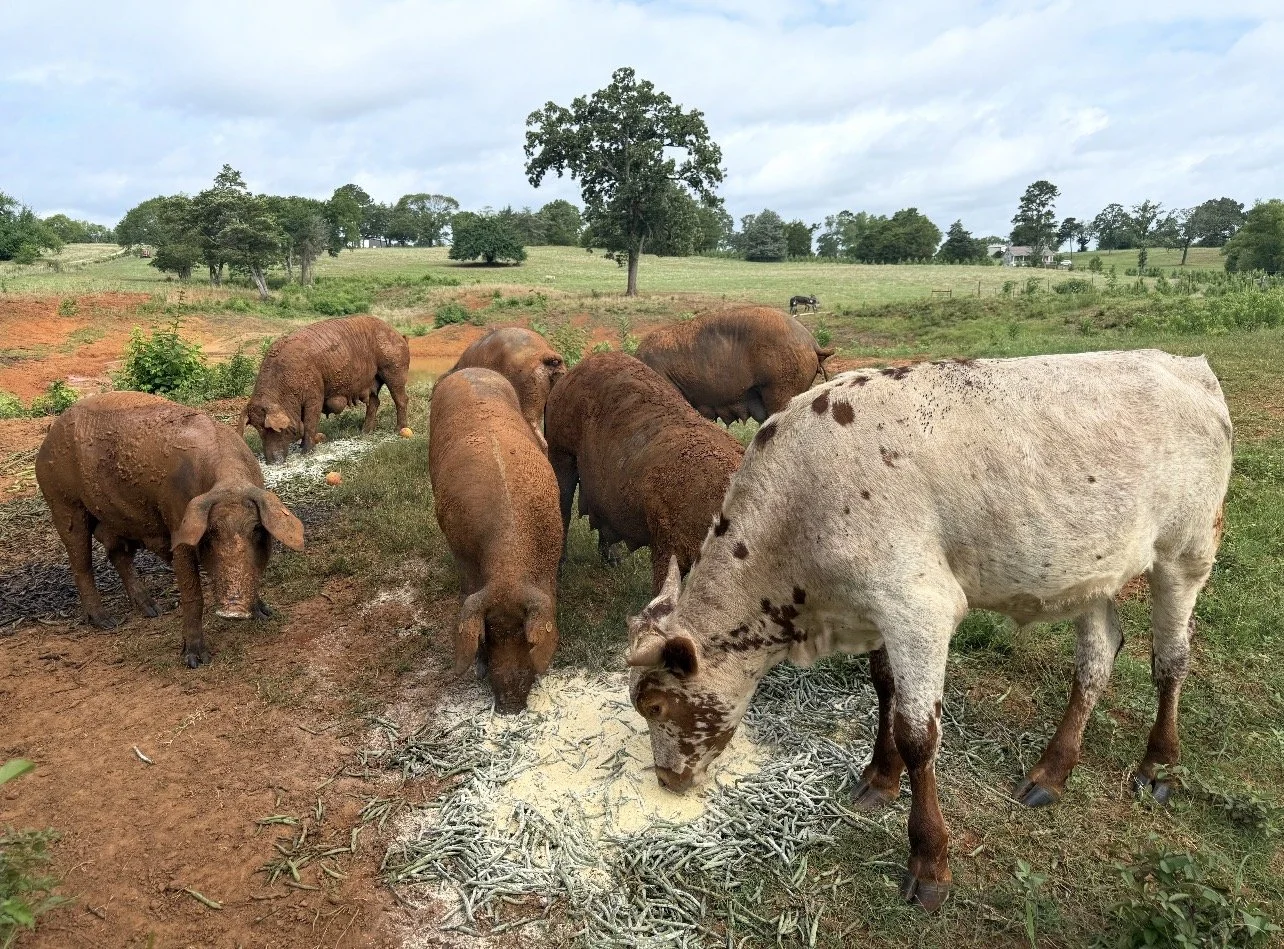
I began paying attention to a place down in Florida called Glendower Farms, where Dr. Hines Boyd has given the better part of a lifetime to the quiet work of animal husbandry.
He’s a learned man by any measure—a Ph.D. in Agriculture from the University of Florida—but what struck me wasn’t the degree. It was the years. Decades spent refining cattle and pigs, not for novelty or speed, but for soundness.
He’s turned his high energy, keen intellect and full attention to the Ibérico pig, and to a question that takes more than one lifetime to answer: what happens when you bring together the best traits of different breeds and let time do its work? His answer is something he calls the Iberian Grazer, a new breed he is passionate about bringing to be. I believe, as does Dr. Boyd, that a careful blending of breeds, each chosen for what it offers, and just as importantly, for how it might live well on the land.
At the heart of it is the Ibérico—already a good steward of pasture and woods, known for its foraging nature and that rich, oleic-acid-laced fat that carries the flavor of where it’s been. But Dr. Boyd didn’t stop there. He brought in the Meishan, an old Chinese breed, not for show but for substance—known for its large litters and its steady, attentive mothering.
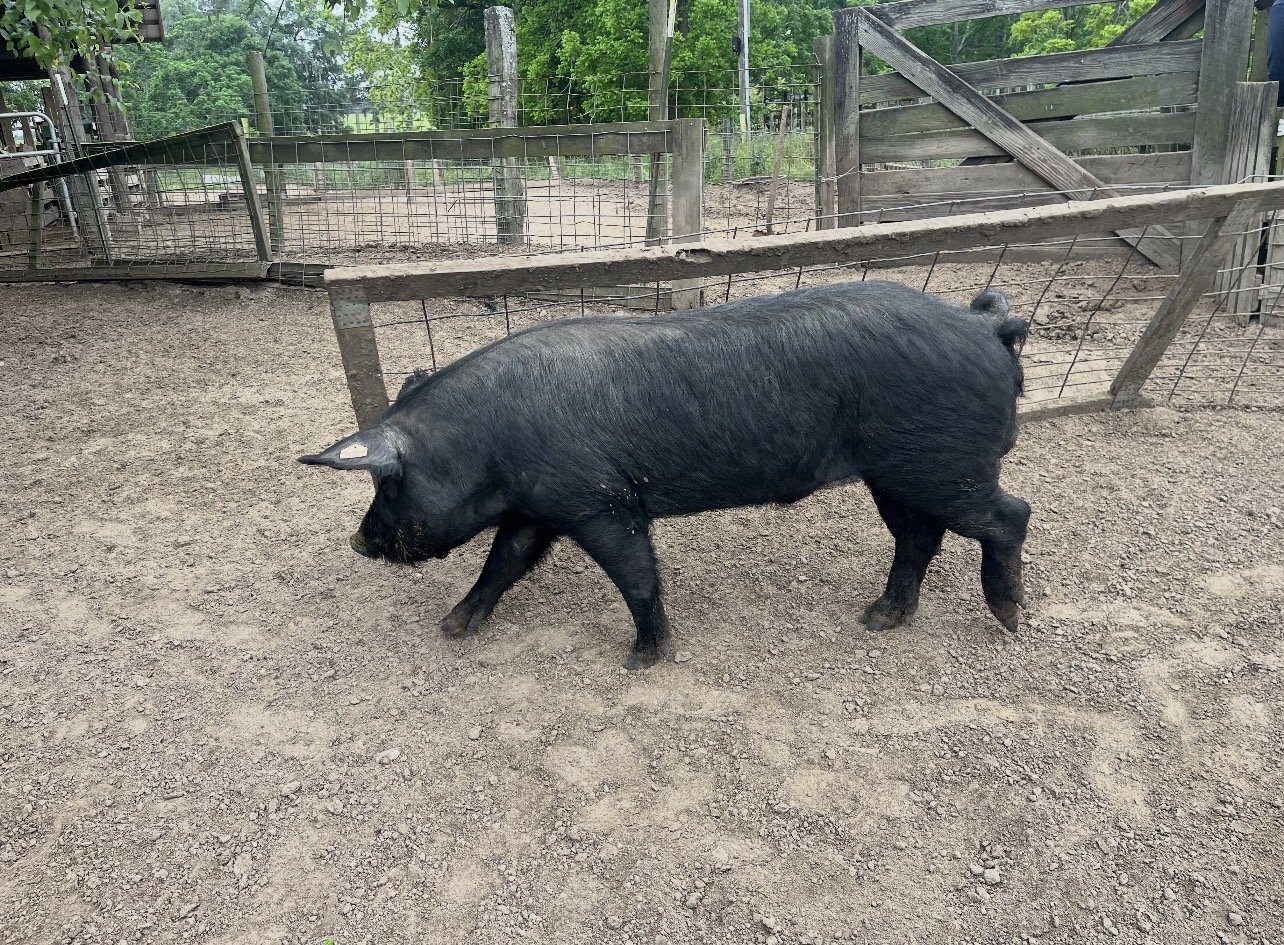
Then there’s the Berkshire, a heritage breed that has long been trusted for its muscle and the kind of hams that remind you pork used to have character. It lends structure to the whole, a sturdiness that balances the softer gifts of the Ibérico.
And closer to home, the Red Wattle—a breed with roots in Texas and Louisiana—known for its
resilience, its ability to endure heat and hardship, and for meat that carries a depth of flavor born from living close to the land.
Bringing these lines together in a way that honors what each one is, and then letting time, selection, and care do the rest. It’s the kind of work that doesn’t make headlines, but it makes a difference you can taste, and more importantly, sustain. I’ve come to see that this Iberian Grazer is more than a crossbreed. It’s a kind of testimony—that good stewardship isn’t about control, but about attention. About knowing when to act and when to wait. Stillwater Farm will be one of the original homes of the Iberian Grazer.
So this dream of pasture-raised pigs is not just about producing a fine ham and prosciutto— though I’d be grateful if it did that well. It’s about taking my place in a longer conversation between land, animals, and care. It’s about trusting that if the ground is tended rightly, if care for the pigs and other animals that call Stillwater Farm home is done with respect, it will, they will, in time, return the favor. That’s the hope, anyway.
And for now, it’s enough to keep me walking the pasture, caring for pigs, looking closely, and learning how to listen to the voice of the earth and its creatures.