Our Family
Stillwater Farm It is not just land. It is a remembering; it’s family.
Stillwater Farm
There are places that a man can stand that feel like they belong to him, and then there are places that make it plain he belongs to them.
Stillwater Farm has always been the latter to me. It is not just land. It is a remembering; it’s family.
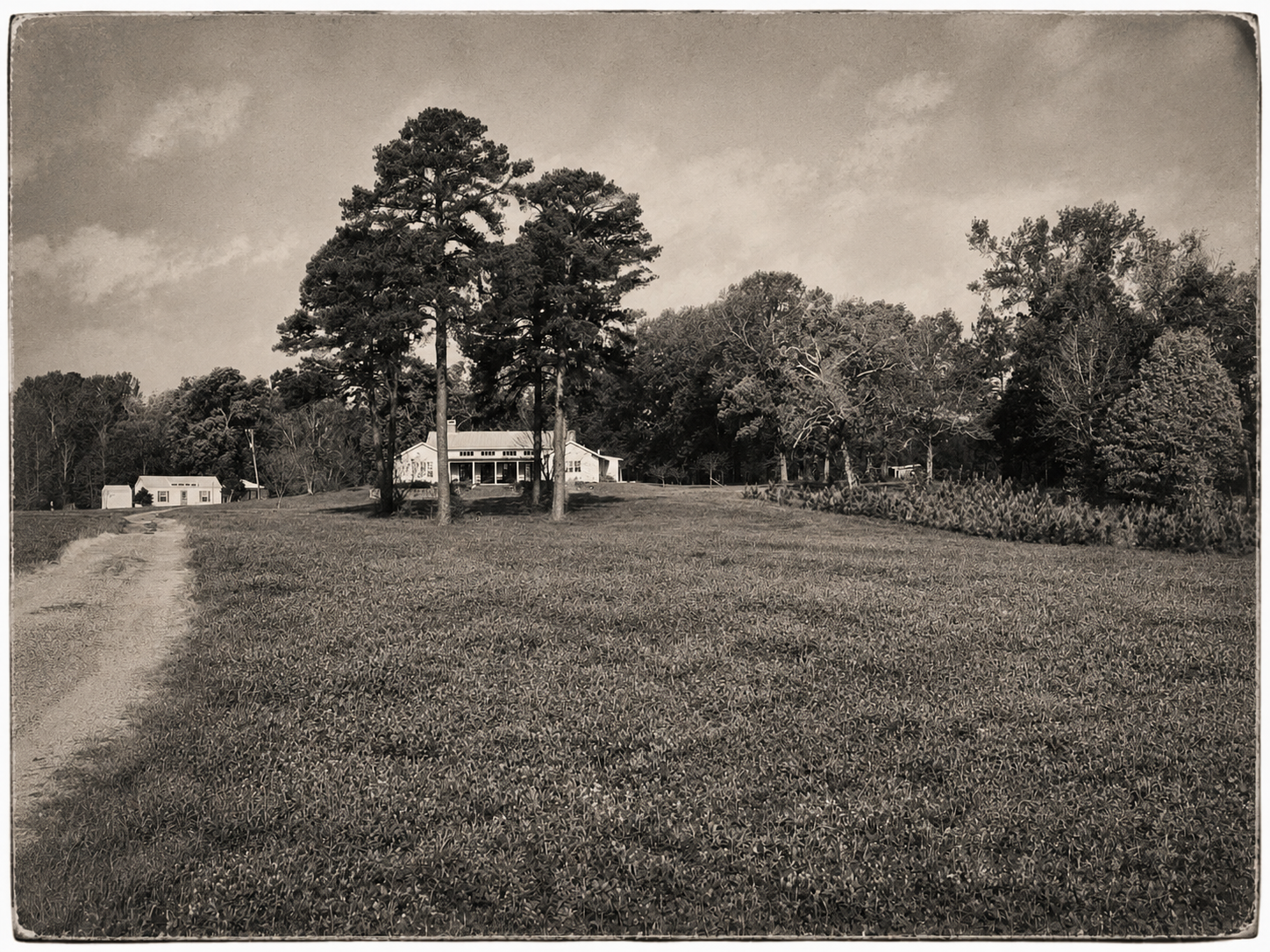
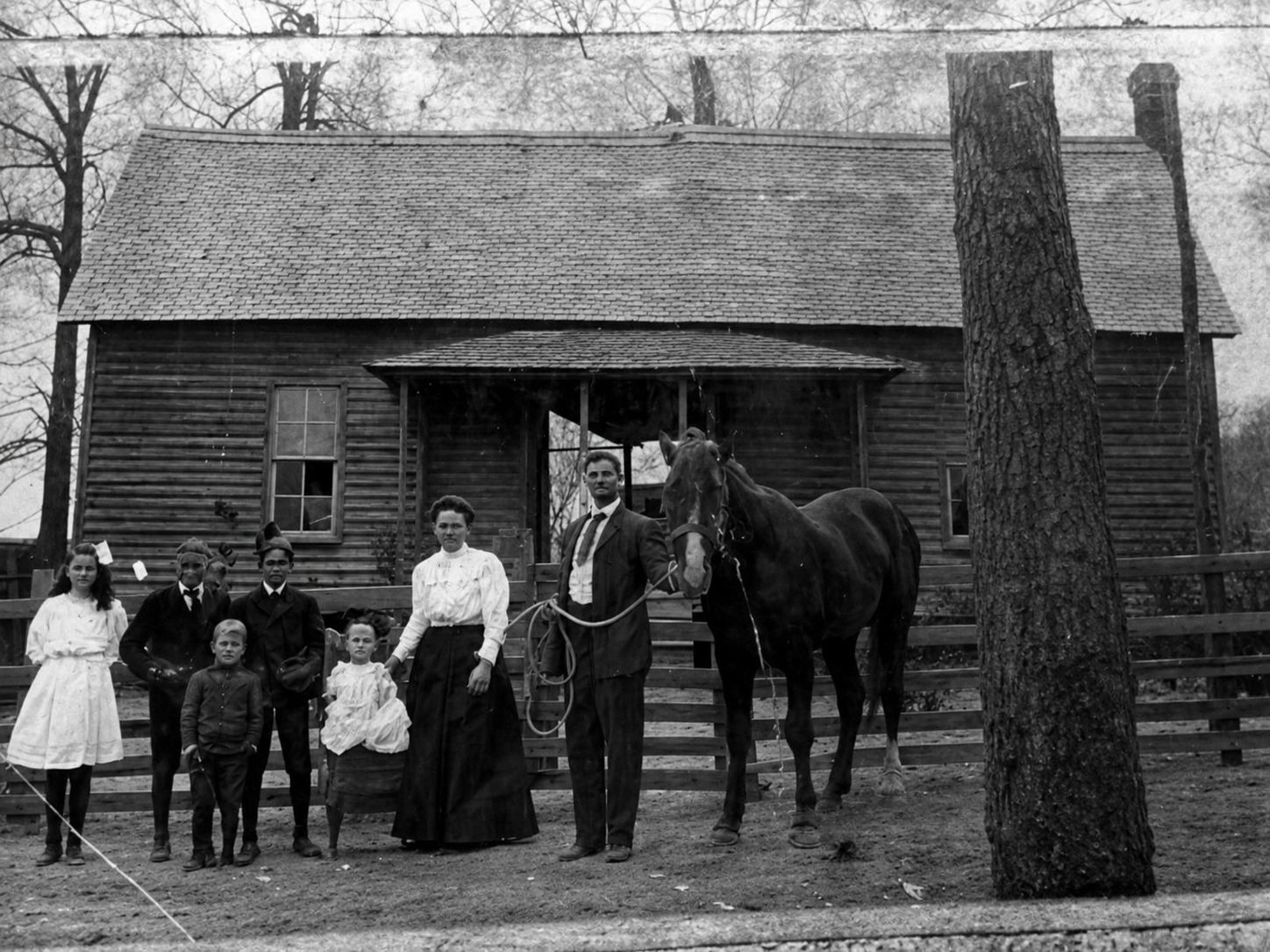
Our ground leans up against the old Fitzgerald place, where my father’s grandmother, Alice Safronia Fitzgerald Cade, first opened her eyes to the world. Firstborn child of Benjamin Fitzgerald, she came into life there, and if you walk that soil slow and quiet, you get the sense it never quite let her go. Some land holds water. Some holds memory.
Not far off stands a pear grove—planted long ago by Erasmus Rasmus Cade for his wife, Alice. He set those trees not merely for fruit, but for nearness. A way of saying she would not be carried too far from her people—her brothers, Jim and Taylor, who farmed the adjoining ground. It was an act of love rooted in place, and like most such acts, it outlived the hands that made it so.
Those trees are still there, bent some and weathered, but faithful in a way only old things can be. They don’t bear like they once did, but come fall, they offer up those rough-skinned Kieffer pears—odd-shaped, firm, and honest—still good for the bite of someone willing to meet them where they are. Around them stand pine and oak, pecan and peach and fig trees planted with my hands.
Six Generations Under the Same Sky
Alice—Nana, as my father Don and his sister Vida knew her—passed that land down to her daughter, Rachel Cade Copeland, Gran to me and my cousins. Rachel handed it to my father, and now it rests, for a while, in our family.
Counting the little ones now walking it is six generations to them. That’s not ownership so much as stewardship stretched across time. We try to teach it that way—that this farm was not built in haste, but handed down in trust. My parents, Martha and Don, made their home here in 2007, building a house that looked out over pasture and pine, with a seven-acre lake catching the light just right most evenings. They meant for it to be their last house. And it was—though not in the way they planned.
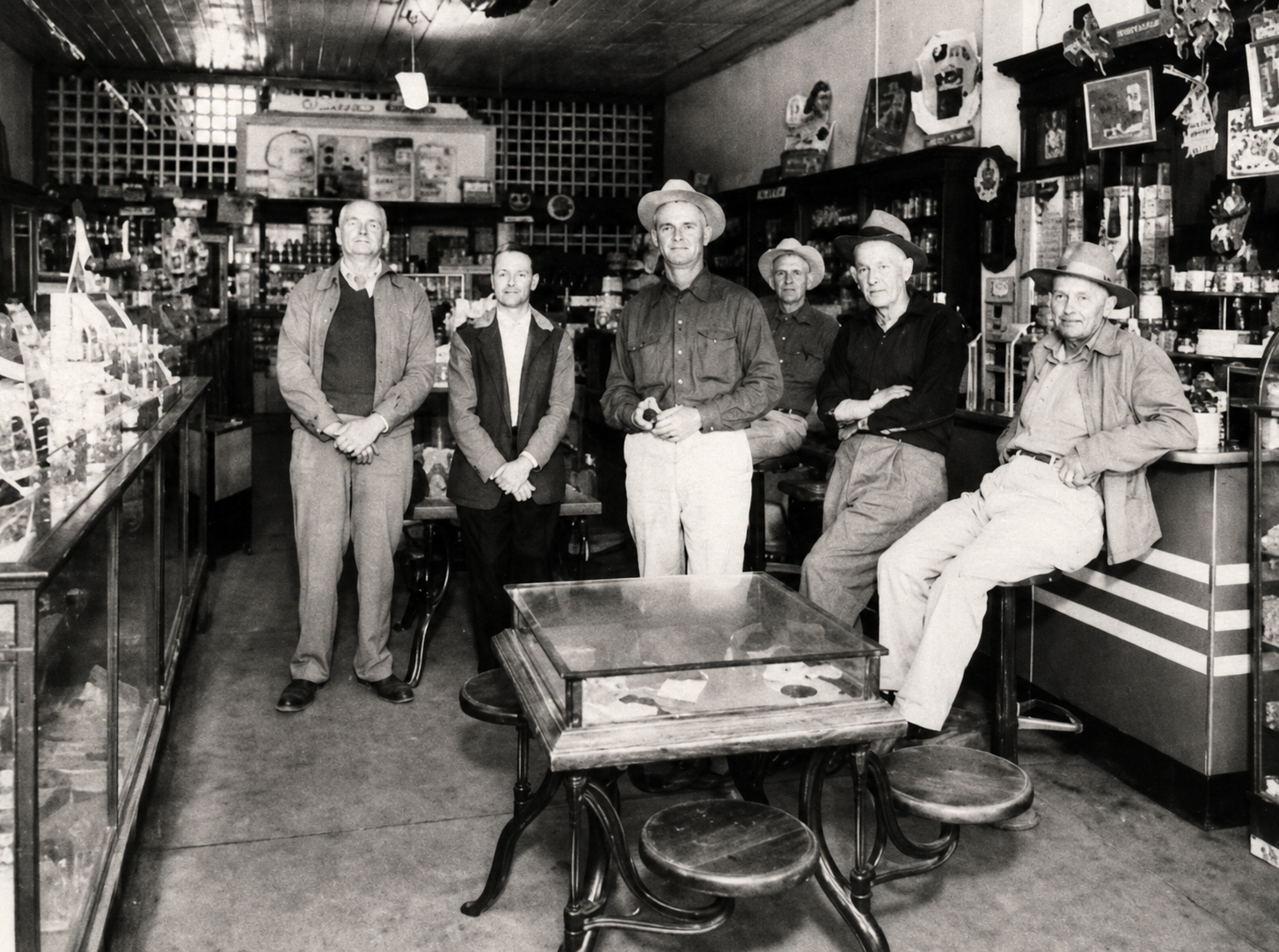
In 2017, while they were away with us at a wedding in Dallas, lightning struck and burned that home to the ground. They were spared, due to being in Dallas with us for the weekend, which is the only grace that mattered most. But the house, and the gathered pieces of a lifetime— including relics from the old drugstore—were taken by fire.
There’s a kind of sorrow that settles heavy in a moment like that
But if a family has been shaped rightly, sorrow does not get the final word. We gathered ourselves and went back to work. Our son Zachary, their grandson, drew up the plans. He’s a gifted architect by trade, but more than that, he understands how a house ought to sit on land—as if it belongs there. He designed a new home on that same spot, tied close to the porch and the life that happens just beyond it. And in less than a year, that house stood again—risen not in defiance, but in quiet faithfulness. Mom and Dad, Moppie and Poppie to us and most people in our hometown, moved back in and carried on, as people do who understand that home is more than timber and nails.
Before that, in 2004, Tammy and I had bought sixty acres adjoining the homeplace from Daisy and Paul Young. They lived in a white, two-story farmhouse built back in 1907. They worked cattle, cut hay, and tended the land alongside a couple hundred more acres that had been theirs for years.
Being Good Ancestors
There’s an old barn there still, put up in the 1960s by a group of East Texas students who likely learned more from the doing than any book could have told them.
And there are stories in that soil too—my grandmother Rachel and Miss Daisy walking those fields, picking dewberries and turning them into cobblers and jams that tasted like summer and friendship held over time. That’s the kind of wealth you don’t measure.
Now it is our turn—not to improve upon it so much as to be faithful to it. To be, as best we can, good ancestors. Our children—Zachary and his wife Emily, and our daughter Emily with her husband Brian—are the fifth generation tending what has been entrusted. And then there are the little ones: Claire Marie, Lily Grace, and Ellis James. The sixth generation, already walking the same ground with lighter steps, though no less claim.
Sometimes I find myself wondering if Erasmus and Alice ever paused long enough to imagine what their choosing might become.
If they could see this many years ahead—this long line of lives tied together by a piece of earth and the decision to stay with it.
Lord willing, Tammy and I might yet see that seventh generation come along. And if we do, I suspect we’ll learn again what the land has been trying to teach all along—that when a place is loved rightly, and tended with care, it does not keep its story to itself. It gives it away, a little at a time, to anyone willing to walk it slow and listen. And as you walk you will hear song birds singing, wild Canada geese honking, pigs grunting as they root around, and the hee-haw of a donkey or two. The Stillwater Farm is family; it’s homeplace.
There’s something holy about feeding people from the land you love.