
From Hobby Farming to a Profitable Pig Raising Vision
by Stan Copeland (Farmacist)
A vision is a preferred future, a forward looking way of life.
My Approach
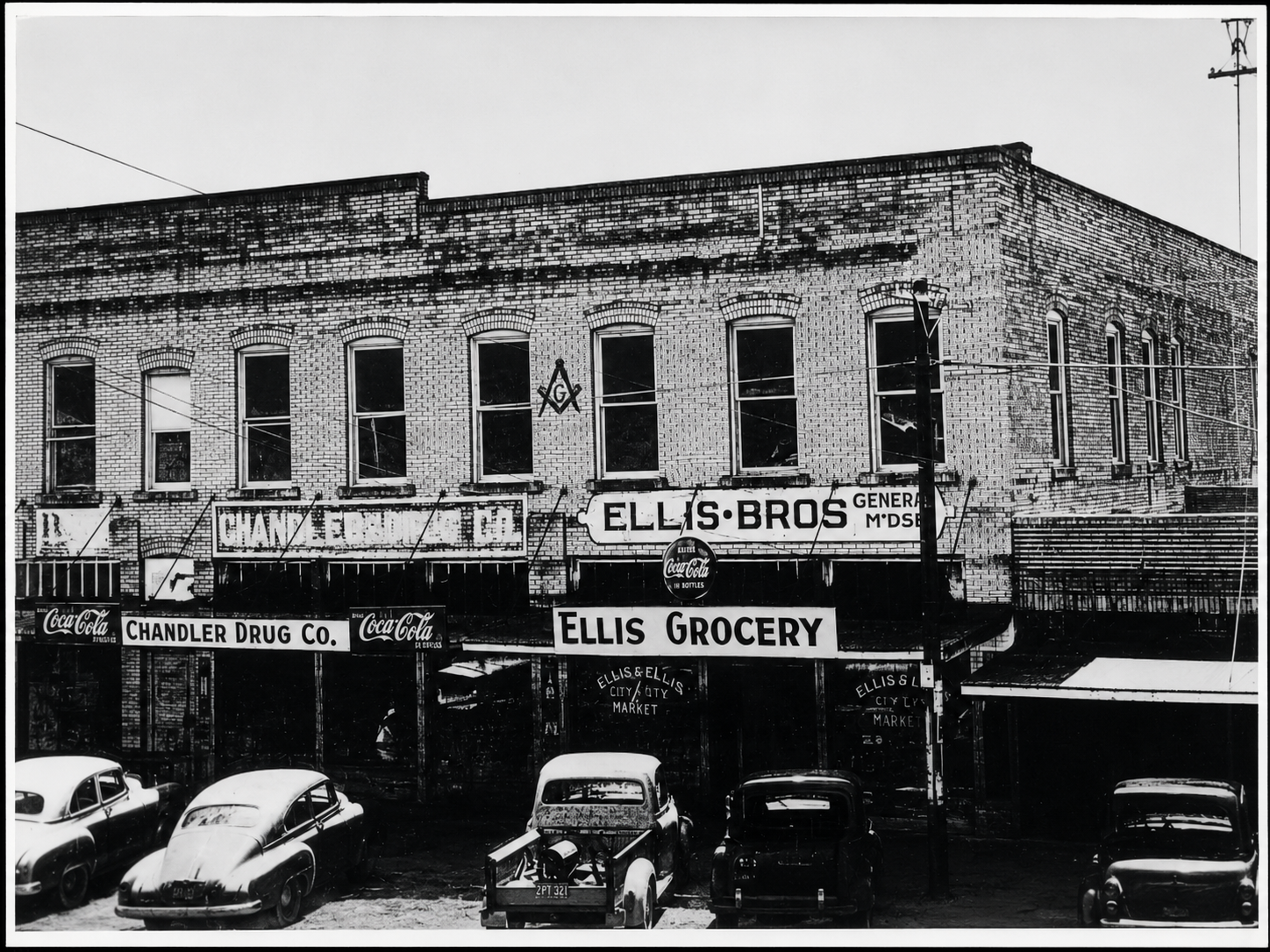
I was born into a family of pharmacists. My grandfather had drugstores in West and East Texas and he was an apothacary. My dad was a pharmacist for six decades. I like to say, "God saw my chemistry grades and called me to preach." My sister took up the family pharmacy mantle. Of late I see my new call as being a Farmacist, and I do see the wisdom in good food, grown right being good medicine. have come to believe that good pork, like good preaching, begins long before anyone arrives at the table.
A sermon is not written on Saturday night.
It is shaped by decades of listening, praying, loving, grieving, and paying attention. In much the same way, exceptional pork does not begin at harvest.
It begins with attention to the microbes in the soil. It begins in the pasture. It begins in the daily choices of stewardship that honor both the land and the creatures entrusted to our care.
People ask why our pork tastes different.
Why the flavor is richer. Why the meat is tender. Why the fat carries a creamy sweetness. It is simply the result of a thousand small acts of care.
A CALLING WHISPERED FROM THE LAND THAT'S BEEN WITH US NOW FOR 6 GENERATIONS
I did not come to farming as a young man looking for a career. I came as an aging, weary pastor looking for balance. For the better part of four decades served large congregations in Houston and Dallas. The work of a pastor places a person at the crossroads of life and death, joy and sorrow, hope and heartbreak.
It means holding the hands of dying parishioners, sitting with families in crisis, navigating conflicts that often have no easy resolution, tending aging buildings that constantly require attention, raising money to sustain ministry and repair what breaks, and somehow finding fresh words from scripture week after week that can nourish a congregation hungry for hope. It is holy work. It is also exhausting work.
The farm became my Sabbath, whether my butt was in a tractor seat or my hands in the dirt my soul had rest. Our 120 acre farm contains sixty-acre which is "homeplace" where my family has put down roots for six generations. What began as a hobby became a refuge. What became a refuge has now become a calling to create a profitable regenerative farm, with Iberian swine as partners, to be a model and encouragement to young and old farmers alike.
The land reminded me that my value was not found in a title or a sermon. The pecan trees did not care how many butts were in pews attending worship. The Noonday sweet onions (an East Texas staple) did not ask about the budget. The pigs did not inquire whether the sermon had been well received. The land simply invited me to participate in God's Genesis vocation: creation & tending a garden.
SOIL FIRST
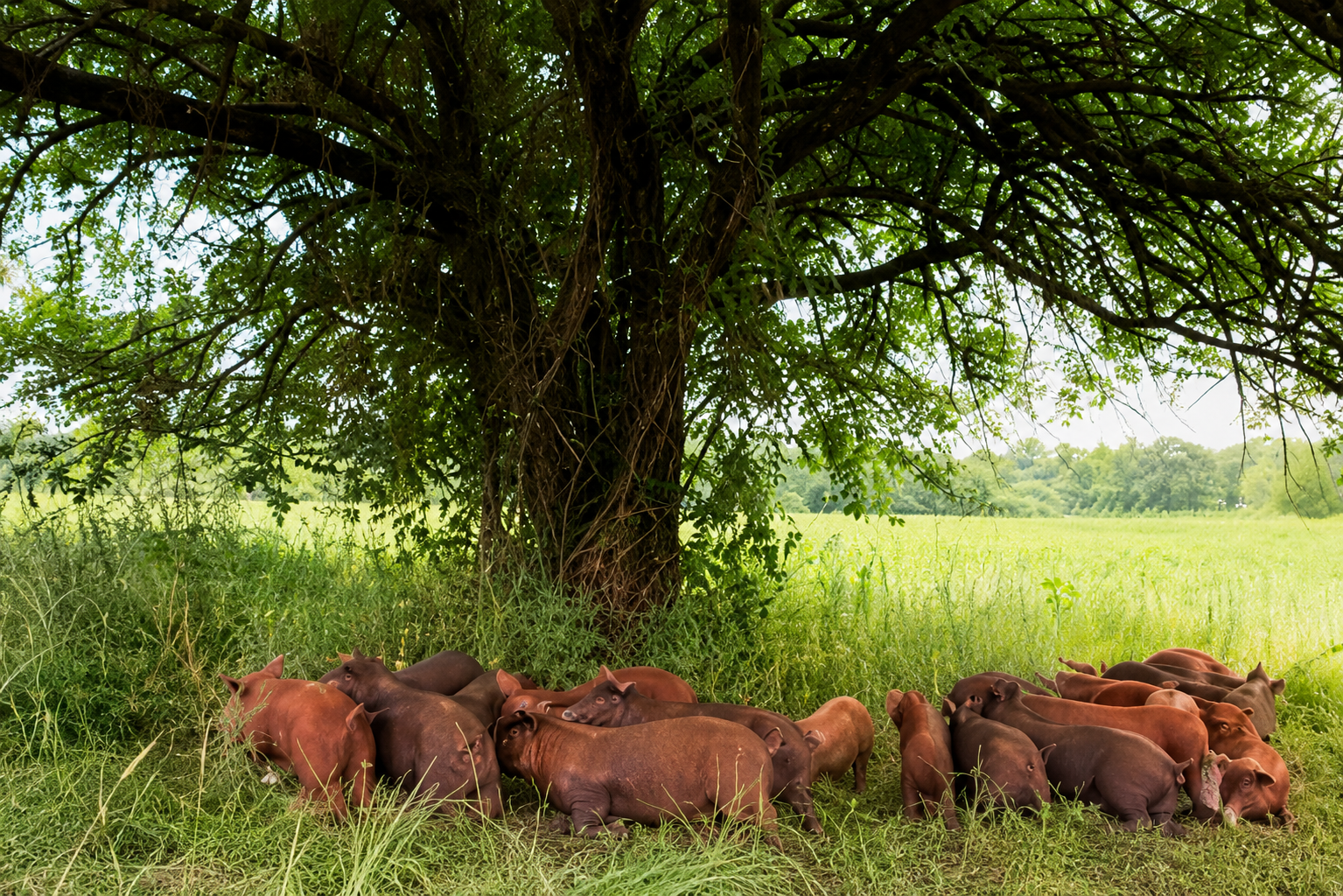
At Stillwater Farm, we believe the future belongs to farmers who understand that they are first caretakers of the soil.
Beneath every pasture lies an invisible world of microbes, fungi, roots, and organisms carrying out the work for which they were created. Those unseen laborers make possible everything we can see.
Healthy soil grows healthy forage. Healthy forage grows healthy animals. Healthy animals become healthy food, and in our beloved country where chronic health issues give rise to the largest pill consumption in the world, we need to look closely at what we eat and where it comes from, which may very well be a big part of the problem.
At Stillwater Farm our commitment is to regenerative agriculture-not because it is fashionable, but because it is faithful. We practice no-till methods as much as possible.
We avoid chemical dependence. We plant cover crops not merely to feed pigs but to feed the soil itself. Creation thrives through cooperation.
EAST TEXAS PASTURES SHAPE THE IBERIAN PIGS
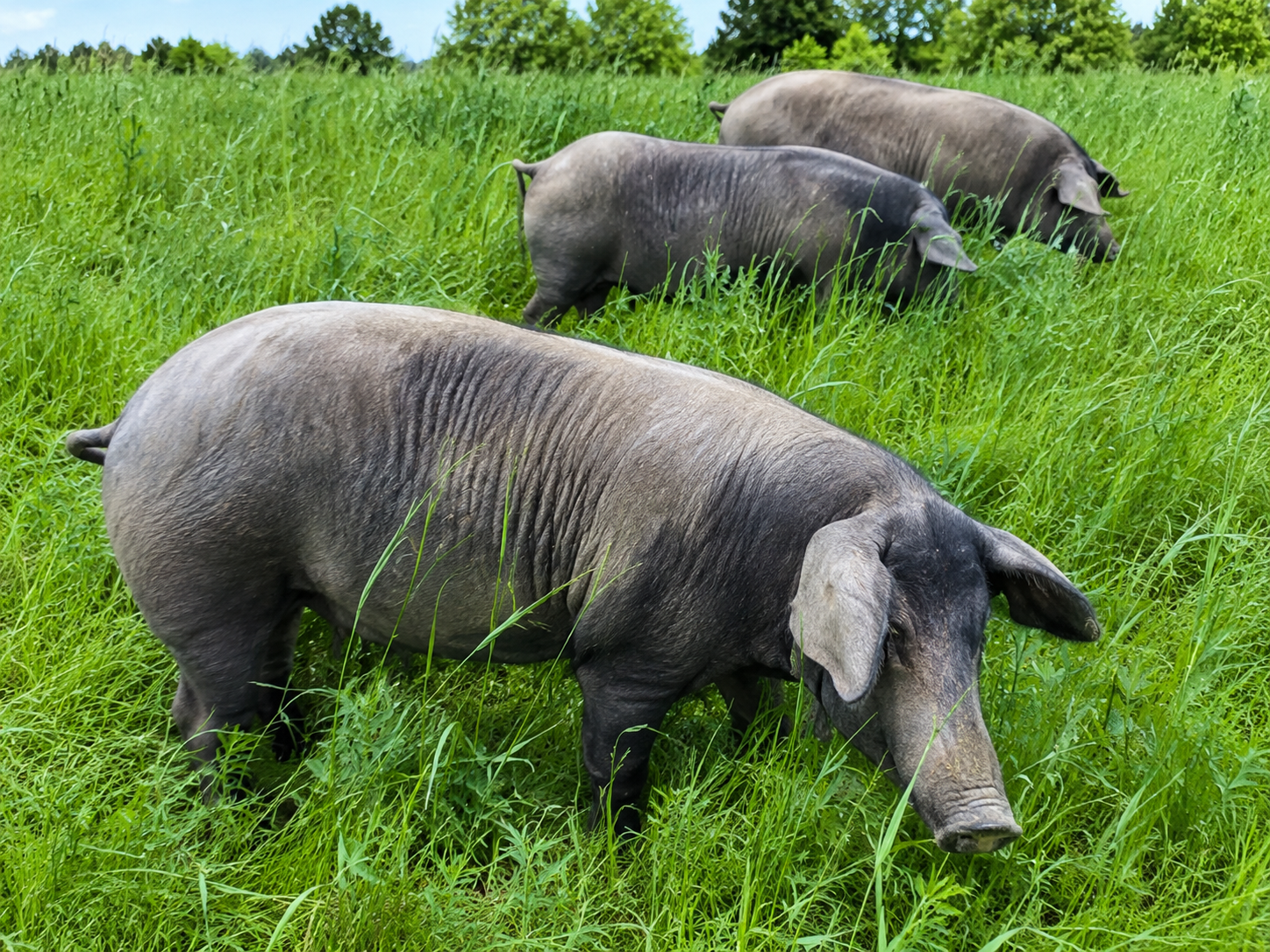
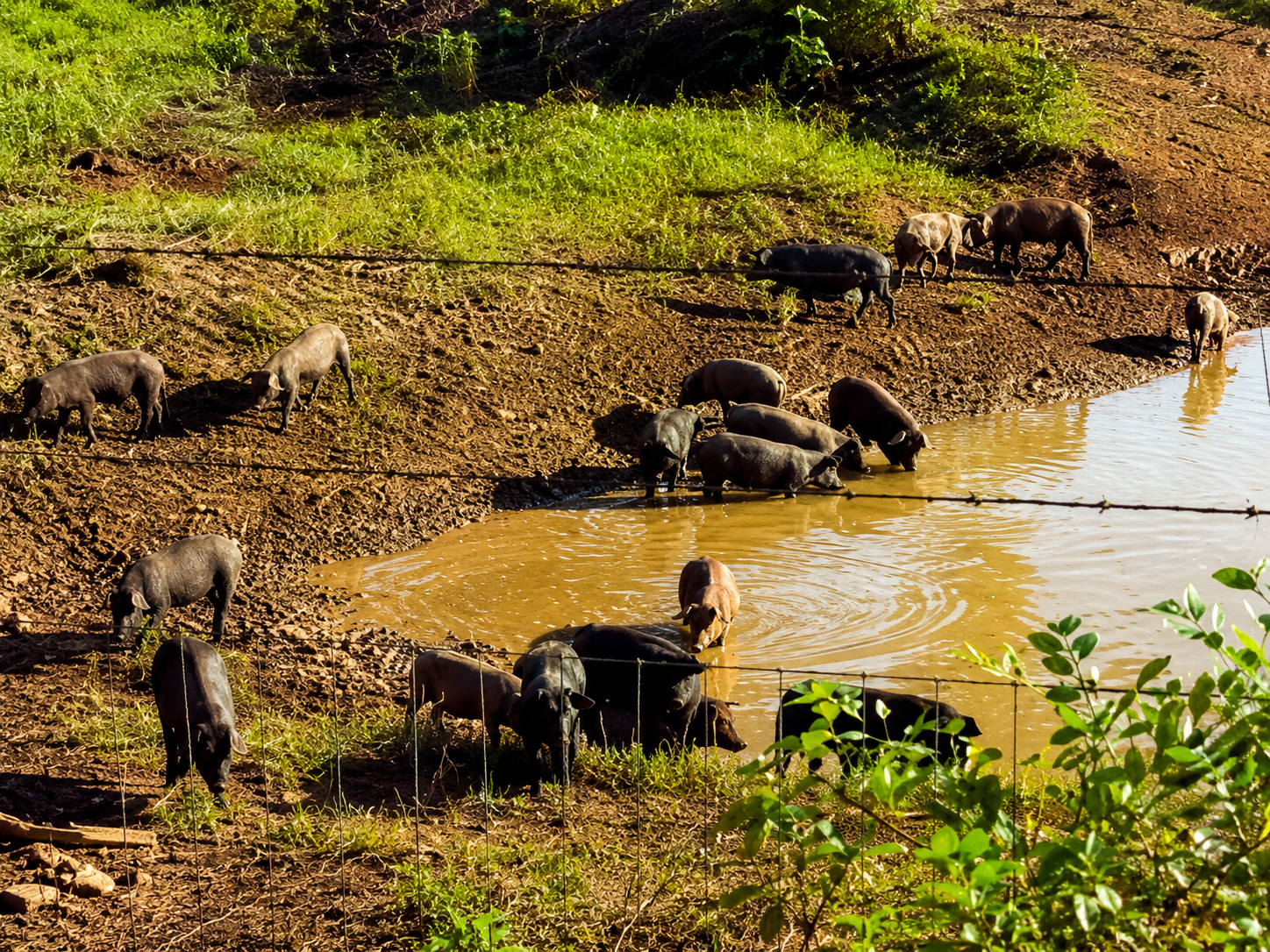
A pig's life is shaped by the ground beneath its feet. Our four principal pastures and the paddocks therein- Hillside, Homeplace, Orchard, and Onion Patch-each offer something unique. Some are sandy. Others rest upon East Texas red clay and sandy loam. Together they provide nearly forty acres of rolling pasture.
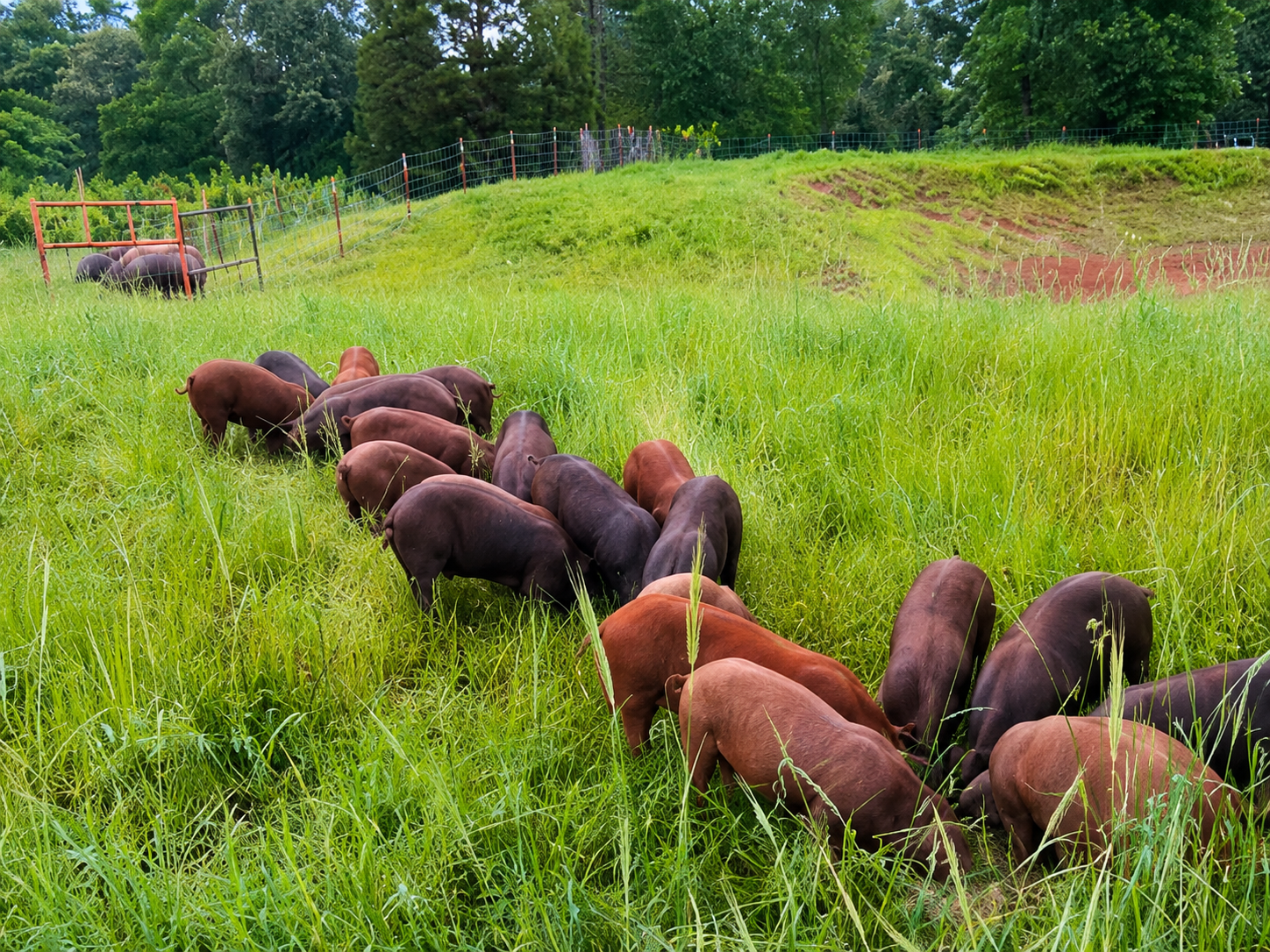
The land rises and falls. The pigs spend their days walking those slopes, rooting through forage, exploring woods, and exercising in ways confinement systems can never replicate. Their muscles develop naturally. Their bodies mature at the pace nature intended. The pasture itself becomes part of the recipe.
WATER IS THE LIFE BLOOD OF THE FARM
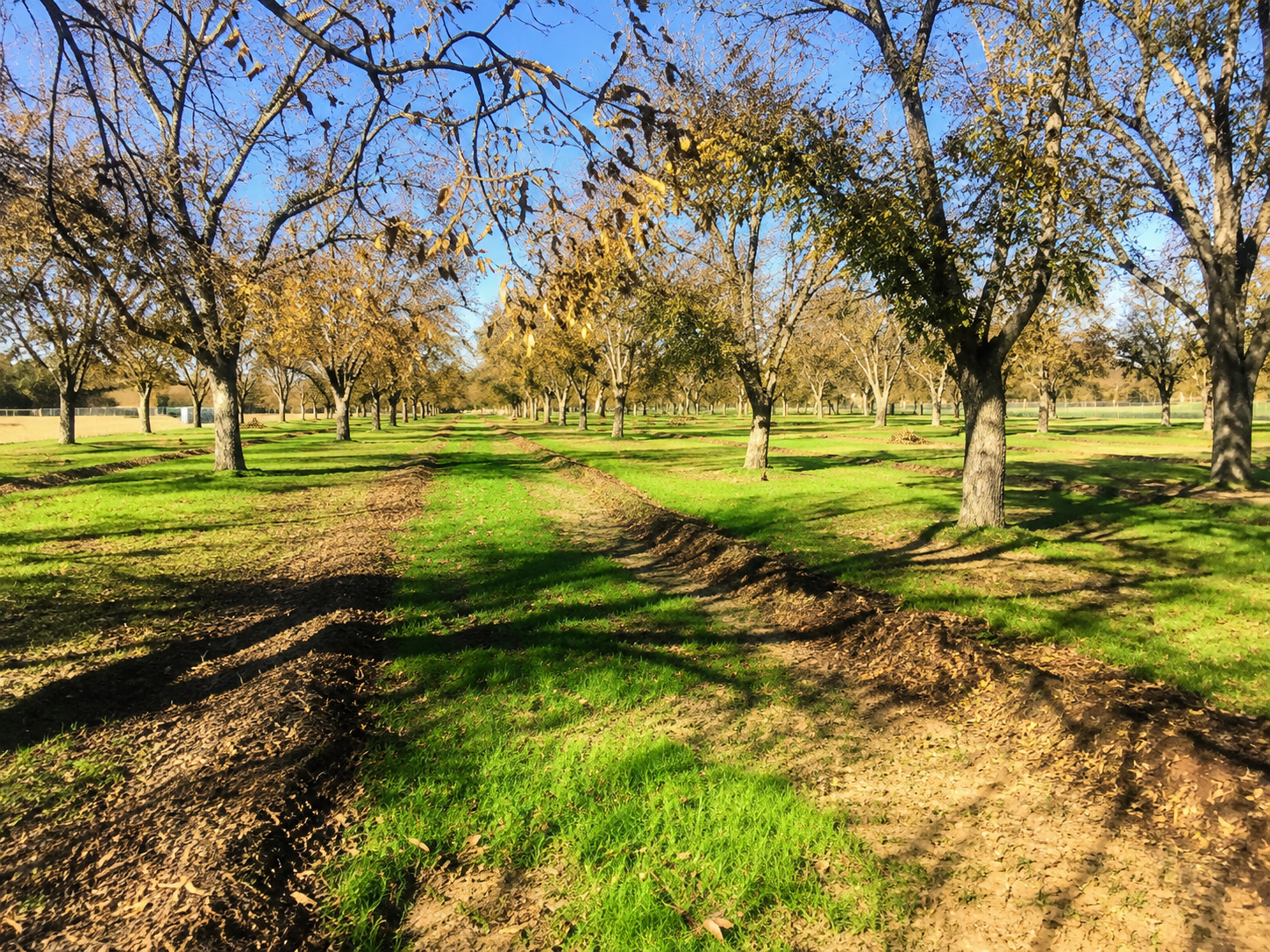
If there is a sacred place on the farm, it may well be the orchard. Mature Choctaw and Pawnee pecan trees spread their branches wide across the landscape.
Beneath them grows
a carpet of clover and grass. In the fall, pecans drop like blessings from above.
Those pecans contribute to the oleic-acid profile that makes Iberian pork and particularly the prosciutto famous around the world. They enrich the flavor. They improve the fat. They connect our East Texas farm to traditions that have existed for centuries. The orchard is not merely a production system. It is a living reminder that abundance comes from patience.
Every great homeplace depends upon good water. Our drinking water comes from a 125-foot well reaching deep into the Wilcox sands. It is clear, pure water-the kind that reminds you why wells have always been considered treasures. The pigs drink fresh water.
A second well, extending approximately 275 feet, supplies our ponds and wallows. It draws from an aquifer rich in iron, a mineral that benefits both plant growth and animal health. That water fills ponds, nourishes forage, and creates the wallows
where pigs cool themselves during the East Texas heat. Watching pigs contentedly resting in a fresh water wallow makes it hard to disagree that
WOODS PLAY A KEY ROLE-TREE BY TREE
About one third of our overall 120 acres of our farm remain wooded.
Many would see these woods as unproductive ground. We see them as playing an essential role tree by tree. The land was once referred to as the Post Oak savannas of East Texas. Pastures for cattle and pine plantations, perhaps overdone, changed the land. Post oak, red oak, white oak, hickory, pignut, and pecan trees produce nuts rich in oleic acid. Pine, cedar, sweetgum, elm, and hackberry provide shade and shelter. The woods moderate the East Texas heat and create an environment where pigs can behave like pigs. A pig wandering beneath oak and pecan trees, and feeding on the nuts they bear, is participating in an ancient partnership between animal and landscape-a sacred togetherness.
OUR FEEDING FOCUS IS ON HEALTH, NOT SPEED -IT COSTS, BUT IT PAYS OFF
GROWING HAPPY PIGS, PRODUCING EXCELLENT PORK BY FOCUSING ON RELATIONSHIPS
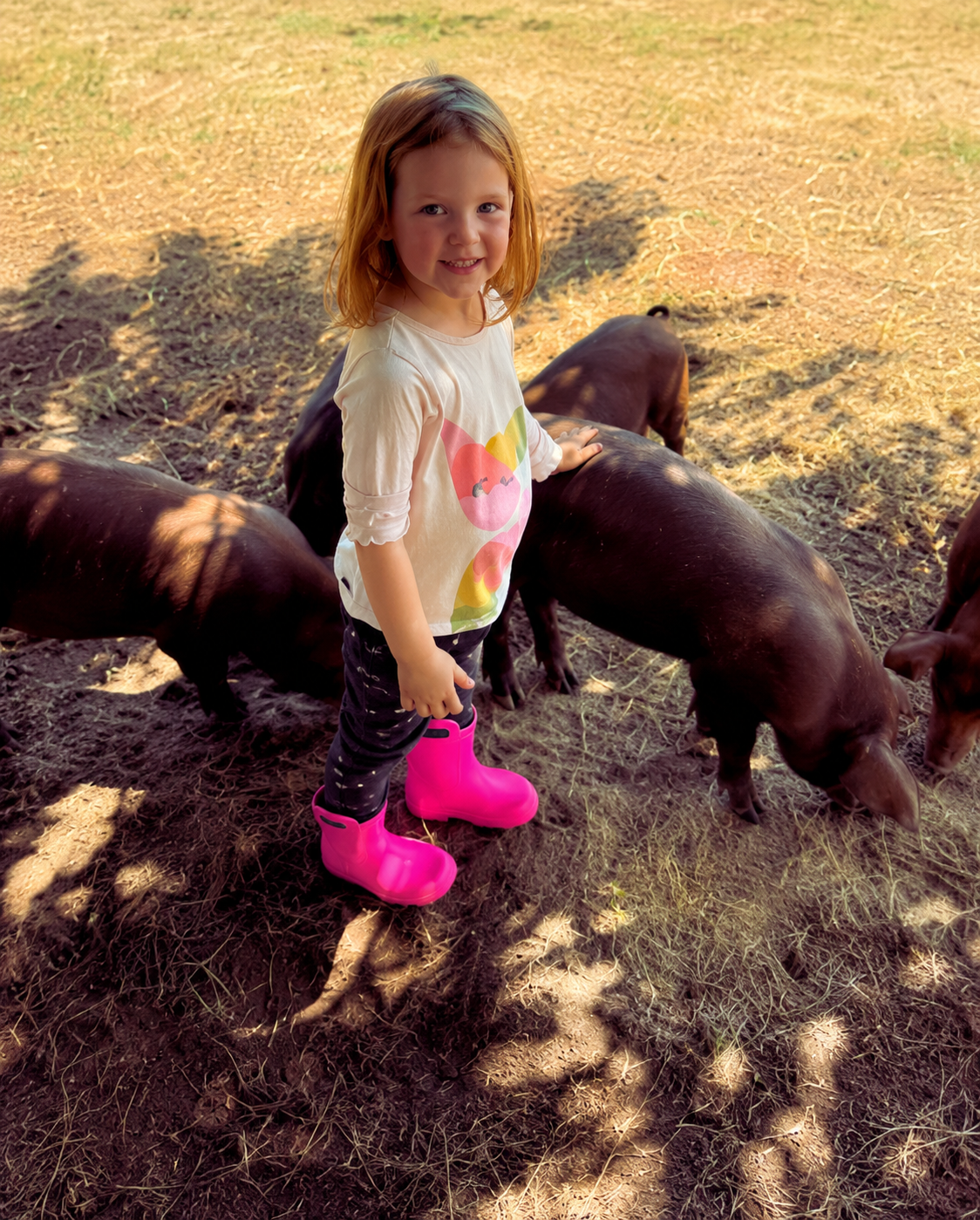
Good pork cannot be rushed. Our feeding program includes GMO free soybeans, hemp seed, high-oleic sunflower seed, corn, minerals, lysine, and other essential amino acids. It costs more than conventional feed. We know that and we pay the cost because we believe it pays off.
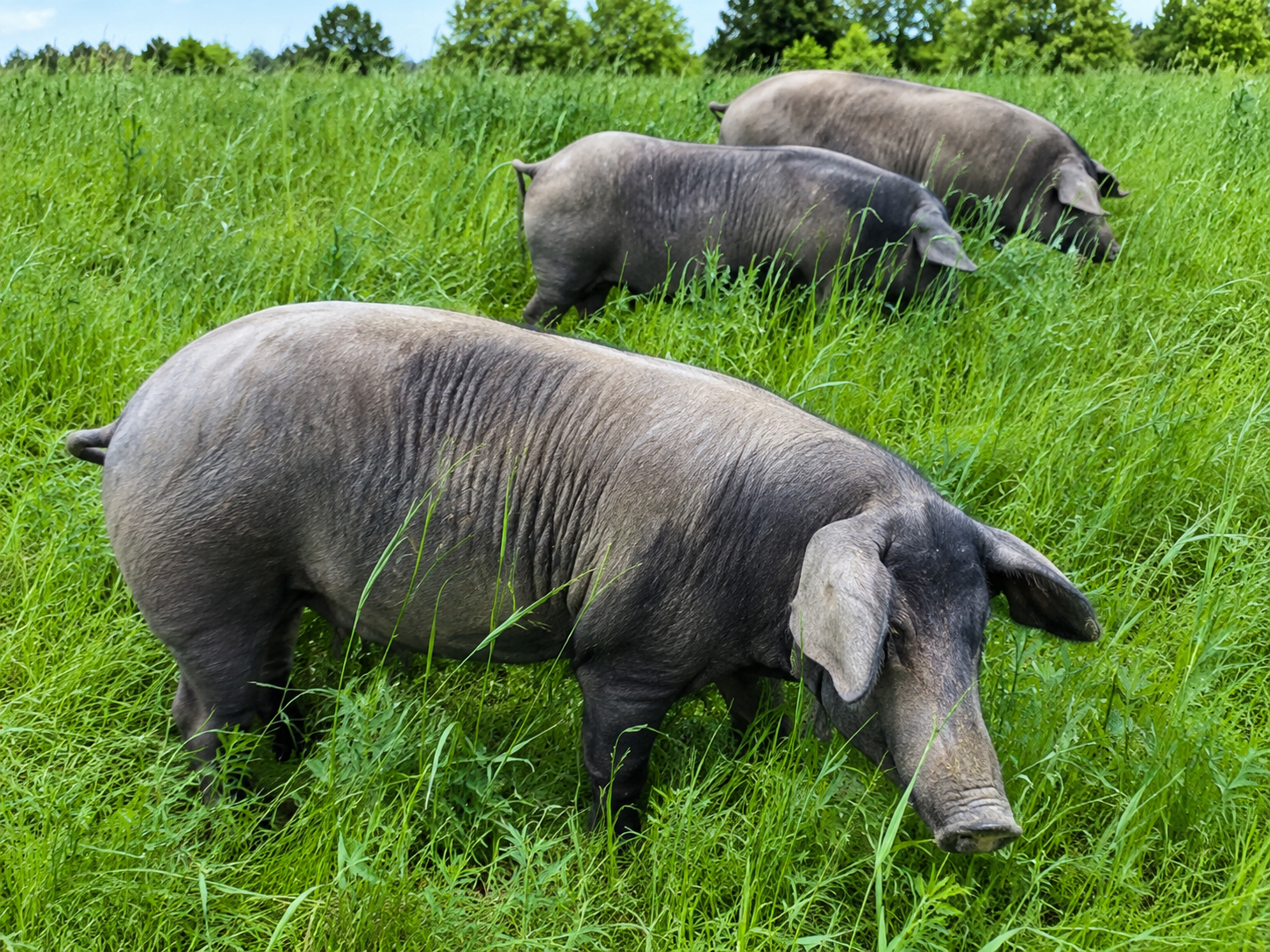
But we are not trying to produce the cheapest pork possible. We are trying to produce the best pork possible with actual healthy dynamics of the Iberico fat that is rich in oleic acid being the ball we keep our eye on. The goal is not simply growth. The goal is health-health for the animal and health for those who gather around the table and eat the delicious pork the lberico and Iberian Grazer pigs provide.
Combined with pasture forage, woodland mast, pecans, exercise, and careful stewardship, this nutrition helps create the rich marbling and flavor, as well as heart healthy benefits in that the fat is monounsaturated fat akin to olive oil. All of this together has earned Iberian pork its reputation as the "Wagyu of Pork." We,
at Stillwater Farm, believe the herico Americano, grown in the USA, and especially that grown in Texas is a literal cut above the imports.
What we are really producing at Stillwater Farm is more than pork. We are growing happy, healthy pigs, producing excellent healthy pork, by focusing on relationships. Relationships between soil and microbe. Between pasture and pig. Between farmer and land. Between food and family.
Between growers and customers. Between fine chefs and home kitchen foodies.
My ultimate vision is for young farmers to see that it is possible to make a living while healing the land. I want consumers to know where their food comes from. I want chefs to recognize that e xceptional flavor begins with exceptional stewardship. And restaurant customers will pay a bit extra
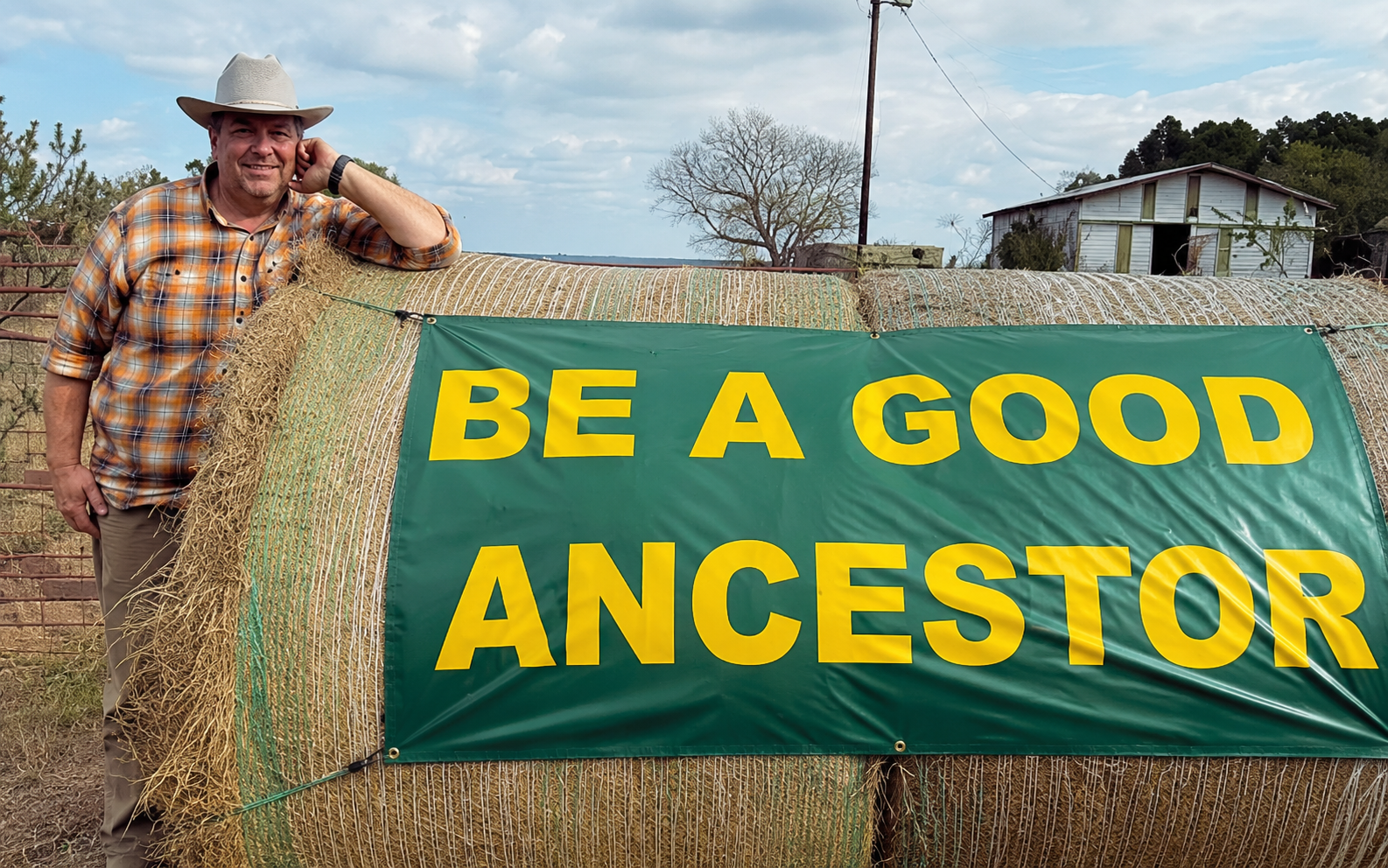
for the perfection. Most of all, I want to leave this place better than I found it. Because in the end, the measure of a good ancestor is not what he takes from the land. The measure is what he leaves behind.
If the pork happens to taste extraordinary, perhaps it is because it carries within it the flavor of good soil, clean water, healthy trees, happy animals, and was raised by a pastor who discovered his next calling as a Farmacist was waiting for him all along, beneath his boots in the East Texas dirt.