Understanding
Pork Cuts
Pork is one of the most versatile proteins in the world.
From slow-smoked barbecue to elegant restaurant dishes, nearly every part of the pig can be transformed into something flavorful and memorable. Different cuts offer different textures, fat content, cooking methods, and culinary experiences. Understanding where each cut comes from and how it is best prepared can help consumers, chefs, and home cooks appreciate the craftsmanship behind quality pork.
At Stillwater Farm’s SowShare program, pork represents more than meat. It represents stewardship, sustainability, animal care, and the connection between land, farmer, and table. Learning about pork cuts helps customers make informed choices while gaining a deeper appreciation for the entire animal.
The Shoulder: Rich, Flavorful, and Perfect for Slow Cooking
The pork shoulder comes from the upper front section of the pig and is one of the most heavily worked muscles. Because of this, it contains a significant amount of connective tissue and intramuscular fat, making it ideal for low-and-slow cooking methods.
The shoulder is typically divided into two primary sections: the Boston butt and the picnic shoulder.
Boston Butt
Despite its name, the Boston butt comes from the upper shoulder rather than the rear of the animal. It is heavily marbled and prized for pulled pork, smoked barbecue, carnitas, sausage, and braised dishes. The marbling melts during cooking, creating tender meat with deep flavor.
This cut is ideal for:
Pulled pork sandwiches
Slow cooker recipes
Smoking and barbecue
Carnitas tacos
Homemade sausage blends
Picnic Shoulder
The picnic shoulder sits below the Boston butt and includes more connective tissue and skin. It is often roasted whole or smoked. Because it contains skin, it can produce exceptional crackling when cooked properly.
Best uses include:
Traditional roasts
Smoked pork shoulder
Crispy skin preparations
Southern-style barbecue
Pork Loin: Lean, Tender, and Versatile
The loin runs along the back of the pig from the shoulder to the hip. It is one of the leanest and most tender regions, producing several popular cuts.
Pork Chops
Pork chops are among the most recognizable pork cuts. Depending on where they are sliced from the loin, they may include different amounts of fat, bone, and tenderness.
Common varieties include:
Rib chops
Center-cut chops
Sirloin chops
Boneless loin chops
Rib chops are particularly prized because they contain marbling and tenderness similar to a beef ribeye. Pork chops are excellent grilled, pan-seared, or oven roasted.
Tenderloin
The pork tenderloin is a long, narrow muscle that runs beneath the loin. Since it does very little work, it is incredibly tender.
This cut cooks quickly and works well for:
Roasting
Grilling
Medallions
Stir-fry dishes
Elegant dinner presentations
Because tenderloin is lean, it benefits from careful cooking to avoid dryness. Marinades and quick cooking methods help preserve moisture.
Baby Back Ribs
Baby back ribs come from the upper rib cage near the loin. They are shorter, curved, and more tender than spare ribs.
These ribs are popular because they:
Cook relatively quickly
Have a balanced meat-to-fat ratio
Absorb smoke and seasoning well
Deliver tender texture when properly cooked
They are commonly smoked, grilled, or oven roasted with dry rubs or barbecue sauce.
Ground Pork and Sausage
Ground pork is produced from various cuts and trimmings blended for flavor and fat balance. It is one of the most versatile pork products available.
Ground pork can be used in:
Meatballs
Dumplings
Breakfast sausage
Pasta sauces
Burgers
Stuffed vegetables
Sausage making is also an important tradition in pork production. Different spice blends, smoking methods, and regional influences create endless varieties.
Examples include:
Italian sausage
Chorizo
Bratwurst
Breakfast sausage
Andouille
Why Quality Matters
Not all pork is created equal. The way pigs are raised directly affects flavor, texture, marbling, and overall eating experience.
Factors influencing quality include:
Genetics
Nutrition
Animal welfare
Stress levels
Pasture access
Farming practices
At Stillwater Farm, the SowShare program emphasizes responsible farming practices and thoughtful animal care. Customers are increasingly interested in where their food comes from, how animals are treated, and how farming impacts the land.
This shift reflects a broader movement toward transparency and sustainability in agriculture.
Nose-to-Tail Appreciation
Understanding pork cuts encourages a deeper respect for the entire animal. Every section offers unique culinary opportunities, from tenderloin medallions to slow-smoked shoulders and richly flavored specialty cuts.
Traditional farming communities understood the importance of utilizing the whole animal. Today, chefs, farmers, and consumers are rediscovering that philosophy through nose-to-tail cooking and sustainable agriculture.
Whether someone enjoys barbecue, elegant roasts, artisan charcuterie, or rustic comfort food, pork offers extraordinary versatility. Each cut tells part of the story of the animal, the farmer, and the craft behind producing high-quality food.
For farms like Stillwater Farm and the SowShare program, that story is about more than pork. It is about preserving agricultural traditions, respecting the land, and reconnecting people with the food they eat.

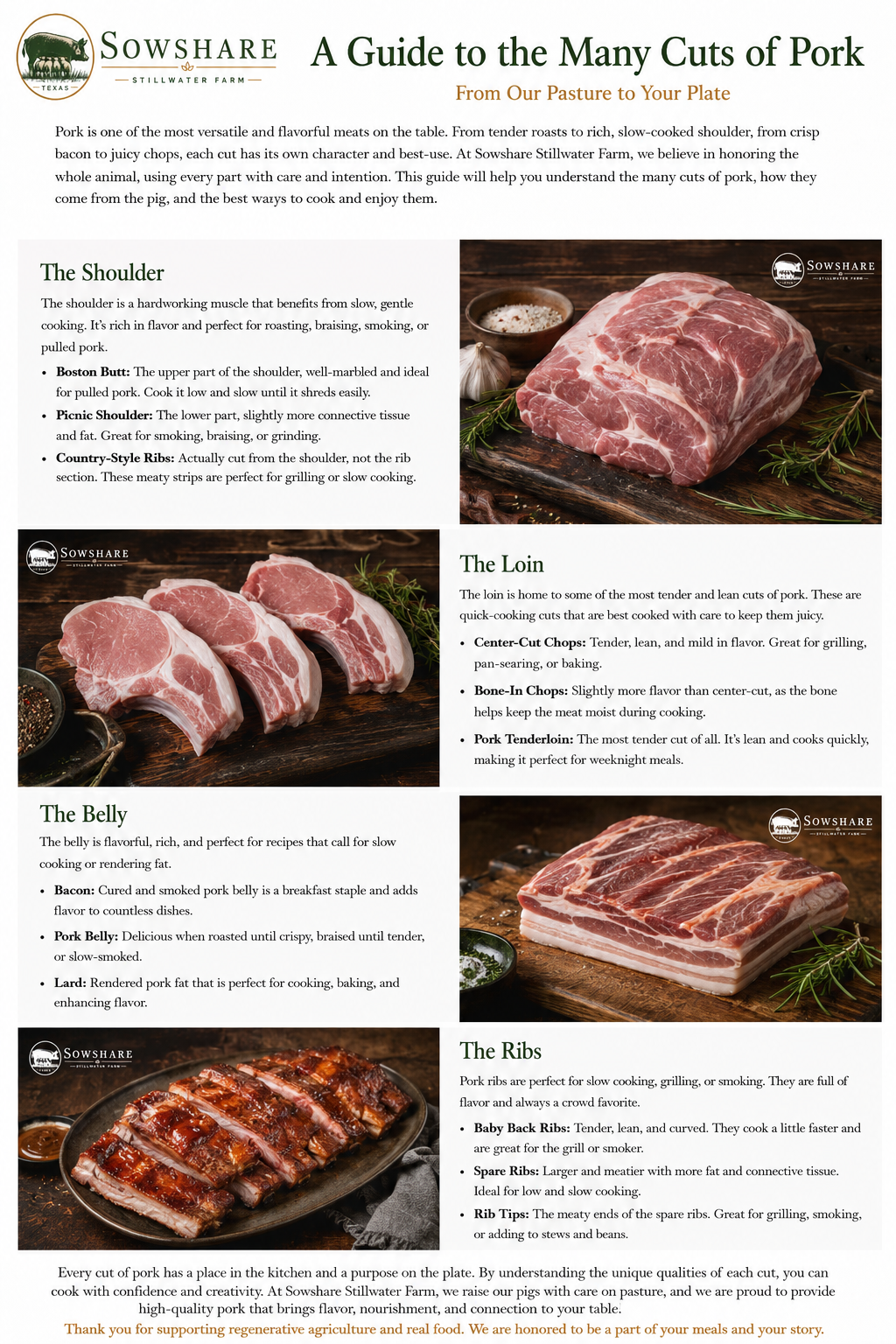
Belly: The Source of Bacon
Pork belly comes from the underside of the pig and contains alternating layers of fat and meat. It is one of the richest and most flavorful cuts.
The most famous product from pork belly is bacon. After curing and smoking, bacon develops its characteristic savory flavor and crisp texture.
Beyond bacon, pork belly is widely used in cuisines around the world.
Popular preparations include:
Braised pork belly
Crispy skin pork belly
Burnt ends
Asian barbecue dishes
Slow-roasted belly
When prepared correctly, pork belly balances crispness, richness, and tenderness in a way few other cuts can.
Ribs: Flavorful and Crowd-Pleasing
Ribs remain one of the most beloved pork cuts, especially in barbecue culture.
Spare Ribs
Spare ribs come from the lower rib section closer to the belly. They contain more fat and connective tissue than baby back ribs, giving them a richer flavor.
They are excellent for:
Smoking
Barbecue competitions
Long cooking sessions
Dry rub applications
St. Louis Style Ribs
These are spare ribs trimmed into a more rectangular shape for even cooking and presentation. They are commonly seen in professional barbecue and restaurant settings.
Ham: A Traditional Favorite
The ham comes from the rear leg of the pig and is one of the largest primal cuts.
Fresh ham can be roasted, but most consumers recognize ham in its cured or smoked form.
Ham products include:
Holiday hams
Country ham
Spiral-cut ham
Ham steaks
Prosciutto
Because the rear leg is a well-used muscle, ham has a firm texture and strong flavor profile. Different curing methods create dramatically different flavors, from salty country ham to delicate European-style prosciutto.
Jowl, Hocks, and Specialty Cuts
Some of the most flavorful pork comes from cuts that were once overlooked.
Pork Jowl
Pork jowl comes from the cheek area and contains rich marbling. It is often cured into guanciale, a traditional Italian ingredient used in pasta dishes.
Ham Hocks
Ham hocks come from the lower leg and are commonly smoked. While they do not contain large amounts of meat, they add incredible flavor to soups, beans, collard greens, and stews.
Feet and Skin
Pig feet and skin are widely used around the world in stocks, soups, gelatin-rich dishes, and crispy preparations.
These specialty cuts reflect an older farming philosophy where every part of the animal was respected and utilized.